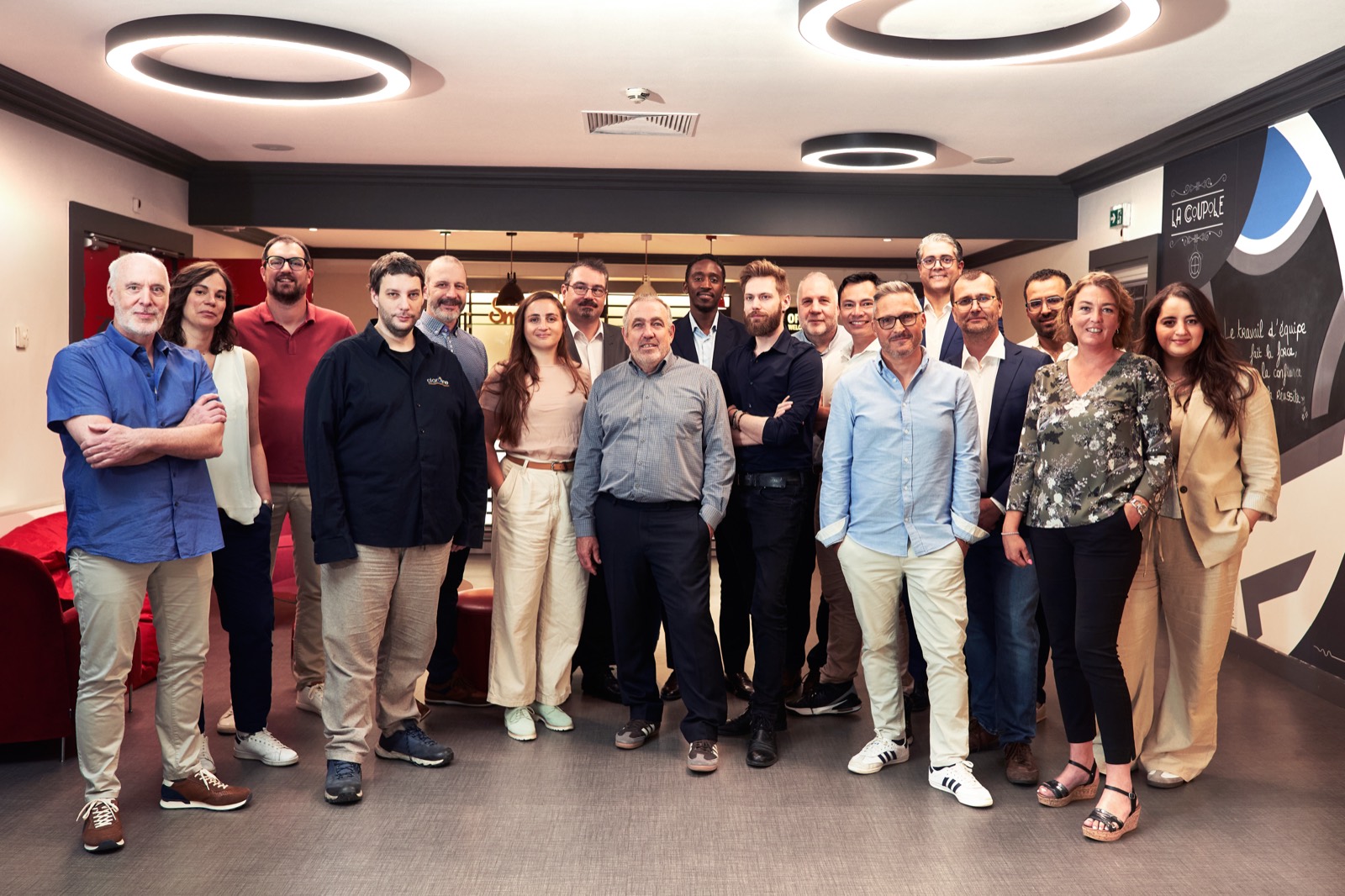
Have you outgrown your tools?
An ageing ERP running out of road, or nothing at all. Each department has found its own workaround, and nobody has the whole picture any more.
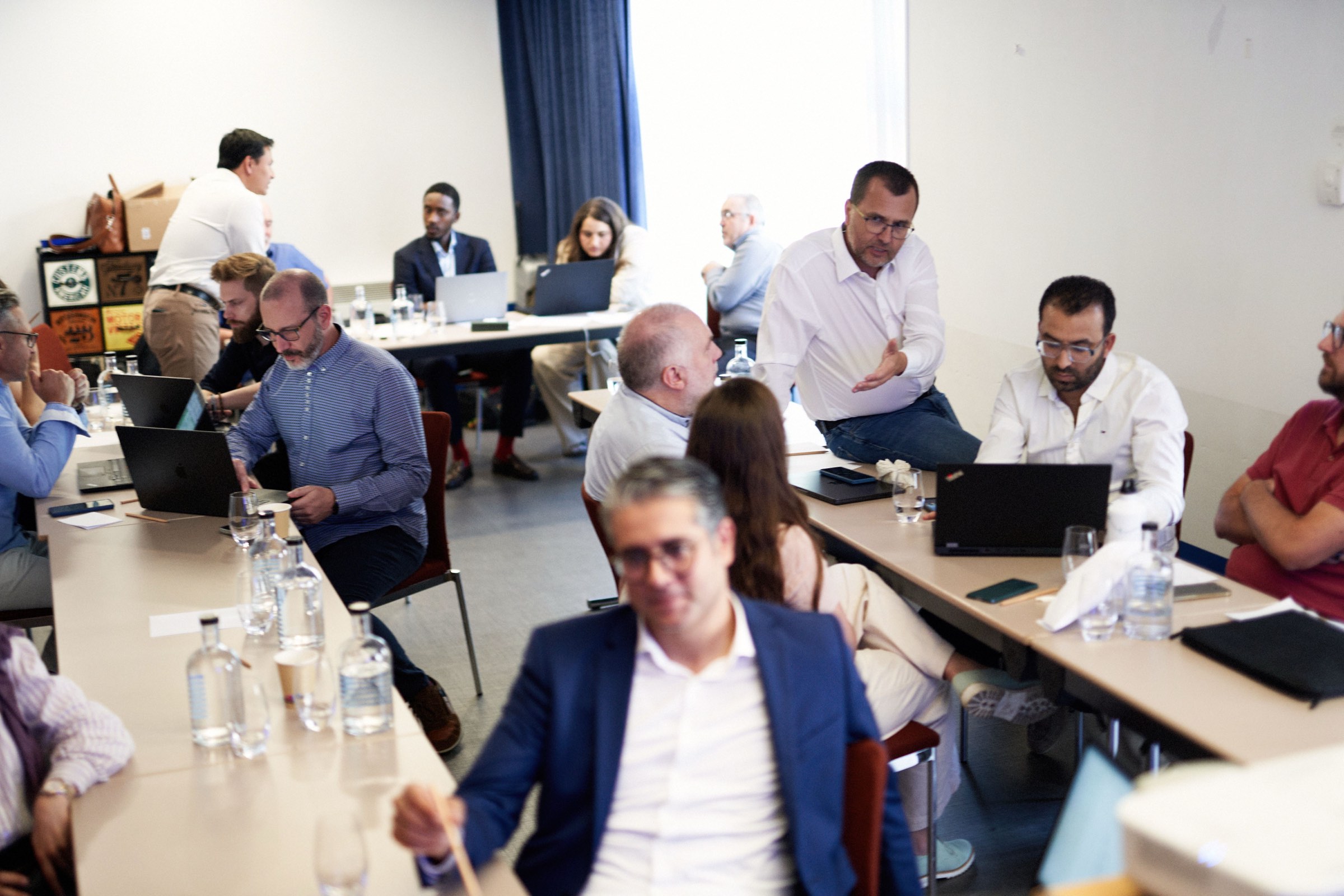
Change the process, adapt Odoo, or hand the work to an agent. We do all three — most do only two.
Charleville-Mézières, Reims, Metz, Nancy, Strasbourg, the Grand Duchy of Luxembourg and the Belgian province of Luxembourg — our consultants work on the ground, close to you and to what you are actually dealing with.
Partnership, certifications and retention are published by Odoo — check them on our partner profile. The user count comes from our Odoo partner dashboard, where the public profile gives only an average.
Where you stand today
An ageing ERP running out of road, or nothing at all. Each department has found its own workaround, and nobody has the whole picture any more.
A project losing momentum, a contact who has become less available, or simply the wish for a different approach. We take over even when the integration is not ours — three of our references came to us that way: two of them two years ago, the third six months ago.
The ERP runs, but your teams still re-key, cross-check and chase by hand. That is exactly what an agent absorbs, without touching the core.
What it costs
5 000 €
That is the price of a 360 assessment in an SME, across the organization's essential functions: CRM, invoicing, purchasing, accounting, human resources.
Your level of maturity and digitalization — not a list of software to buy. How the work actually gets done, what is already tooled, what still rests on spreadsheets and habits, and how much change your organization can absorb.
We find that out by talking to the people who do the work, not only to those who describe it. It takes time, and it is the only method that yields an estimate that holds.
Then comes the Fit-to-Standard. At the end of that design phase, the project budget is set and becomes binding.
Nobody buys a figure produced before anyone has looked. The assessment says what there is to do and how far; the design phase says what it costs, gap by gap — and you are the one who decides. If you arrive with a specification already written, we start here directly.
The €5,000 assessment applies to an SME on that scope. A larger organization, or a wider scope, is priced differently: we tell you before we start, not on delivery.
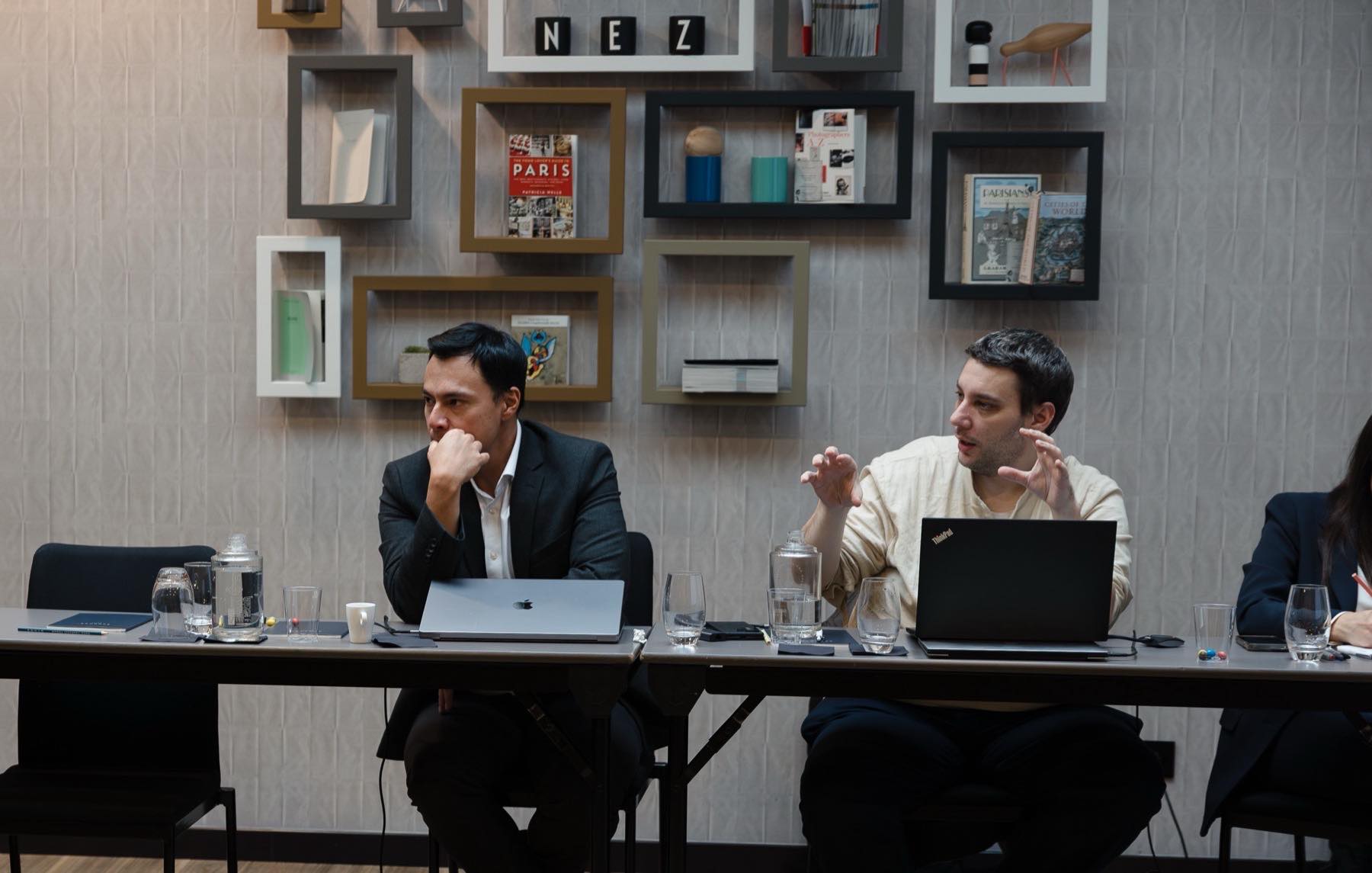
Our method
Standard Odoo covers most of a company's generic processes, and its configuration takes you further still. Our job is to show you all of that range — because what is never built is also never maintained, and never migrated.
Estimate the saving
Three settings, on your own orders of magnitude. The figures cover three years, one major upgrade included.
9 requirements have no native answer.
Coverage rises to 91%, leaving 3 requirements.
Without Fit-to-Standard
23.2 days of custom work
Over three years€80,765
With a Fit-to-Standard
9.1 days of custom work
Over three years€31,639
Difference over three years: €49,125, or 61% less custom effort.
A requirement with no native answer is met by a small (0.75 d), medium (2.5 d) or complex (4 d) development. At the outset they split 30 / 30 / 40; as the Fit-to-Standard absorbs the simpler needs, what remains shifts towards the complex — because what survives is what no configuration can settle.
The daily rate is €850, the low end of the range observed in France for an Odoo Silver partner. Integration is estimated at twice the development effort, project management at 15% of the two combined. Maintenance costs 15% of development per year, a major upgrade 20%.
This is not a quote. It is an order of magnitude meant to inform a decision, not to replace one. Real figures come out of the diagnostic, then the design phase — and they cover your specification, not an average.
Standard first. We always start there, and we move on only once that range has been explored in front of you.
Adopting the standard almost always means reworking processes and part of the organization: your teams have to accept working in the order Odoo proposes. That is where supporting them is decisive — and where our consultants' experience changes the outcome, because finding the native workaround that genuinely covers every case means pushing Odoo to its limits.
The goal of a Fit-to-Standard taken all the way: moving from around 70% native coverage to close to 90%.
That is more than half the custom development effort, and as much maintenance and migration cost you will never carry.
Your business will always call for adaptations — if only so that Odoo's screens speak your language.
Our three levers
Faced with a gap between your business and the standard, a classic integrator has only two levers: change the company, or adapt the tool. We add a third — hand all or part of the work to an agent. The three combine on the same project, process by process.
The first question. When standard Odoo is already good practice, it is the process we challenge, not the software.
A real case: reproducing a multi-level approval workflow inherited from an organization that has since changed. We simplify it instead of rebuilding it.
When the business specificity is legitimate and creates value. Odoo then follows the real need — and that is not a failure of the method.
A real case: an object the business handles every day and the standard does not know — with its own fields and rules. Odoo has no such object: it has to be created.
The lever the others do not have. When the requirement amounts to work a human would do by hand in the ERP today.
A real case: generating client contracts. The information lives in documents someone would have to read and re-key; an agent processes them and fills Odoo on its own.
Adapting Odoo builds what is missing inside. An agent does what a human would do by hand around it.
None of these levers is superior to the others.
The question is not which is the most modern, but which answers the need while keeping your system as simple and robust as possible. One element weighs in the balance: every line of custom code is paid for again at each version upgrade, whereas an agent lives outside Odoo's core. That is set against the benefit, the risk and the cost — and it is with you that we decide, gap by gap.
The system in two halves. On the left, Odoo Core: the foundation holding centralised data, business rules, permissions and traceability — this is where Fit-to-Standard integration happens. On the right, the Agentic Layer: agents built around your Odoo and your processes. Around the circle, the three levers: change the process at the top, adapt Odoo on the Odoo Core side, automate on the agentic side.
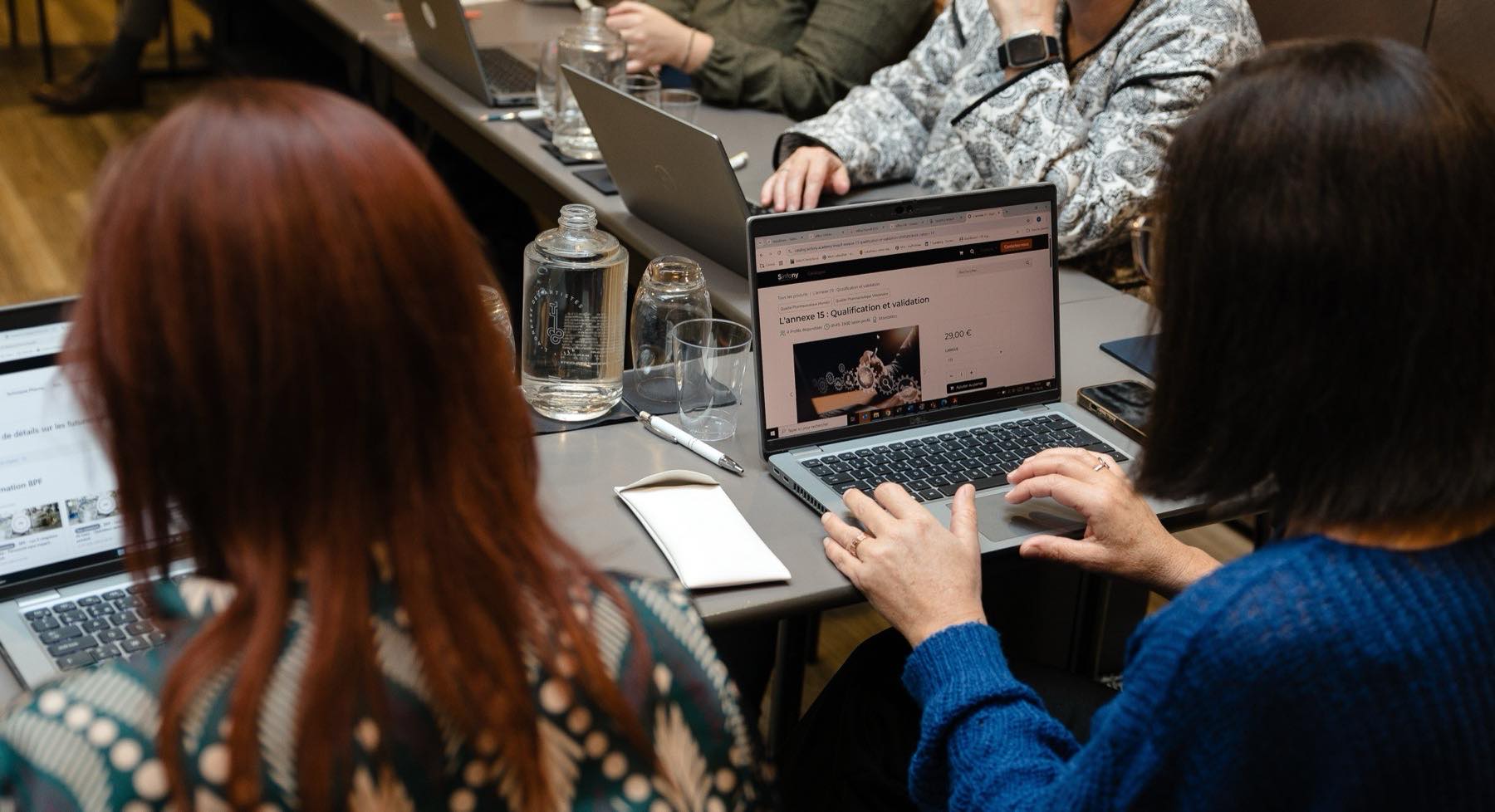
The agents
AI, like business intelligence before it, does not need Odoo as its front door. Nobody logs into their ERP to look at a dashboard: BI tools read its data and live alongside it. AI is taking the same path.
A salesperson would rather have an agent create the lead and the quote for them — by reading their notes, their calendar and their email — than go into Odoo to tell it what to do. You start your day in your inbox, not in your ERP.
The agent therefore sits between you and the system, in two ways: driven by the user, through a conversation — which will be tomorrow’s ordinary interface; or directly between your customer and the system, when the action can be triggered with no intermediary, such as opening a support ticket.
Many teams still use their ERP like a typewriter: you have to know where to click, which fields to fill in, in what order, and how to respect logic configured somewhere else. An agent understands the request, fetches the context and executes inside Odoo — with the rights it was granted, and not one more.
An AI vendor arrives after the integration: it runs trunking along the walls. We design your Odoo already knowing what will be automated.
Orkeo is neither a classic Odoo integrator with an AI offering bolted on, nor an AI company plugging into an ERP. The same team knows the standard, the custom work, and the processes that produced both.
Less complexity. More automation.
We reuse building blocks, skills and patterns — not prefabricated job roles.
Where to place an agent
Three business flows, as they are actually lived. Click a slot to install an agent ; place several to see what they do together.
Lead
CRM — lead
Meeting
CRM — activity
Pricing
outside Odoo — costing tool
Quotation
Sales — quotation
Negotiation
Sales — revisions
Signature
Sign
Contract sent
Documents
Project opened
Project — tasks
From first contact to an open project — drop an agent on the flow to see what it takes on.
It books the meeting for you — reads the enquiry, offers slots from your calendar, confirms with the client — then writes up the minutes afterwards.
It reads the output of your costing tool and drafts the quotation straight into Odoo from your template: lines, discounts, terms, lead times.
The quotation has gone out and silence sets in. It follows up at the right moment, asks whether anything still needs clearing up, and offers a slot to negotiate if the client hesitates.
The order is signed: it re-reads the quotation to pull out everything it sets in motion, then checks in Odoo that each one actually happened. Is the project created in line with the quotation? It tells the account manager. Is an administrative step due — a file to lodge, a department of the client or of a public body to notify? It takes care of it. Does a purchase order follow? It checks Odoo's suggestion and chases the buyer as the deadline nears.
Internal request
Purchase — internal request
Order prepared
Purchase — vendors and lead times per product
Request for quotation
Purchase — call for tender
Bids received
Purchase — comparison
Purchase order
Purchase — order
Confirmation
Purchase — acknowledgement and date
Shipment
Inventory — incoming transfer
Receipt and inspection
Inventory — receipt, Quality
Stock updated
Inventory — moves
From internal request to goods in stock — drop an agent on the flow to see what it takes on.
It vets the request before it becomes an order: does the product actually exist, is its purchase price filled in, are the preferred vendor and lead time recorded? It becomes the buyer's single point of entry for creating and keeping product records — instead of everyone creating their own on the side.
When a purchase calls for competing bids, it sets up the tender in Odoo, invites the vendors, chases them until their answers come in, then gathers the offers in one place. It then helps you compare in conversation: at equal price, lead time and terms, what actually separates the bids.
It manages the wait: it watches the promised dates, chases the vendor as soon as one slips, and tells the warehouse what is coming and when. On receipt it handles what goes wrong — a shortfall to chase, a non-conformity to report to the vendor.
It reads the stock entry with a critical eye: quantities that do not match the order, units that change along the way, an unusual location, a move that would leave negative stock. It raises the alarm before the discrepancy spreads to counts and costs.
Bank transactions
Accounting — bank synchronisation
Reconciliation
Accounting — matching
Invoice control
Accounting — vendor bills
VAT check
Accounting — taxes
Payroll inputs
Employees — time off, expenses, attendance
Payroll entries
payroll bureau, then entries in Odoo
Period close
Accounting — lock date
Reporting and filings
Accounting — VAT return, aged balance
Closing the books, from matching to period close — drop an agent on the flow to see what it takes on.
It hunts down missing paperwork instead of waiting for it. A card payment matched with no receipt? It alerts the cardholder by name. A subscription invoice sitting on a provider's portal? It fetches it itself. A hotel night with no invoice? It writes to the hotel to get one.
Before anything goes to the payroll bureau, it checks that every employee's file is complete: attendance logged, absences recorded, expenses entered and approved. Whatever is missing, it asks the person who owes it. Once everything is in, it sends the data through — or reports that the file is ready. When payroll comes back, it checks the accounting postings; and if contributions are not paid by direct debit, it reminds the director before the deadline.
This is where it stops being an accounting assistant. It validates VAT before filing, makes sure everything is matched before the period closes, updates budgets and cash forecasts. Then it turns to the director: where cash stands today and in three months, which receivables are ageing dangerously, which reminders to send. It does a controller's work — the one Odoo does not do.
A complete example: the management control agent, which checks your Odoo accounting with you, from reconciliation to cash.
Our areas of expertise
Expertise is not claimed, it is shown. So here, for each area, is the detail only someone who has done the work would know.
Point of sale, multi-site operations, order taking, kitchen flow.
Odoo’s native multi-device handling: several card terminals on a single till. And scales, supported natively.
Shop, checkout journey, in-store collection, website.
Click & collect with slots computed from real availability and capacity — not from a plain calendar.
Sales processes, quotations, pricing, customer journey.
Parent-subsidiary handling, still thin as late as v19. We extended it: an aggregated 360° view at group level.
Sourcing, suppliers, commitments, receiving.
Tenders, rudimentary out of the box: comparison of the bids received and scoring, so the choice can be justified.
Warehousing, movements, accounting processes and Luxembourg specifics.
Traceability reworked for regulated environments — pharmaceutical validation, 21 CFR Part 11 requirements.
Business, functional, technical: all three skills in the same team. That is what lets us challenge a process rather than copy it into the software.
Clients
Migrating to v18
÷ 2
From 220,000 to 104,000 lines of custom code. At one client, moving to v18 was the chance to take the requirements one by one rather than carry the existing code across: more than half of what had built up no longer had a reason to exist, the standard covered it. That is code nobody will maintain, and nobody will migrate next time.
Migrating v17 to v18
2 weeks
At another client, the move to v18 was delivered one month after Odoo’s release, in two weeks. It is the other side of the case above: less custom code to carry across means an upgrade that takes two weeks instead of a quarter.
Gap analysis
74 → 88 %
For a semi-public institution, we measured the standard’s coverage, requirement by requirement, before and after configuration: from 74% to more than 88%. Fourteen points gained without writing a line of code.
From a bakery to a telecom group. At one of them, the entire operation was digitalised in nine months. All sixteen are published on our Odoo partner profile.
Questions
Odoo provides the building blocks; we design the use and the architecture. Its own documentation states that the standard agent cannot modify the database: we took an inventory of what is built into Odoo 19, and of what version 20 changes. Two questions remain open: how far does Odoo’s MCP connector expose your custom work, and should Odoo really be the way in? Your agents can also come to you inside Microsoft, Claude or ChatGPT.
None imposed — the market moves too fast to lock you in. We choose based on your maturity, your IT landscape, your security constraints and the tools you already have. To get started, Claude or ChatGPT connected over MCP is sometimes enough; other cases call for a real orchestration platform.
No. We reuse building blocks, skills and patterns — not prefabricated job roles. A useful agent knows your Odoo, your rules, your data, your permissions and your processes. We industrialise the components, not your business.
No. We work with three levers: change the process, adapt Odoo, or automate. Custom work stays legitimate when it creates value — it is simply no longer the default reflex.
Odoo remains the system of record: we avoid pointless duplication, and each agent only reaches the data and actions it needs. Beyond that, your IT strategy decides — your own cloud in the common case, a French infrastructure when the constraint is real. Hosting, models and retention are agreed with you before deployment.
An agent never holds more rights than it was granted. On sensitive actions: permissions, approvals, deterministic rules, reliable context and an audit trail. We do not hand a critical operation to an uncontrolled free-form answer.
We start from one concrete process, measure value, risk and feasibility, then pilot a use case — rather than building a platform before anything has been proven. The two stages are distinct: the assessment is fixed-price and defines the scope; the Fit-to-Standard that follows is what sets the budget and commits to it.
Get in touch
Your trade, what is getting in the way today, and what you expect from Odoo. We will tell you frankly what we see — and the first two hours cost you nothing.
Your data is processed in the European Union and never sold on. Privacy policy.